
Since launching in 2014, the Lost Glasgow Facebook page has attracted a 137,000-strong global following. The site, which uses archive photographs to spark stories, memories, and debate about the city, its buildings, its people, and its future, was launched off the back of the successful Lost Edinburgh site.
Glasgow City Heritage Trust have teamed up with Lost Glasgow, to present a fascinating exhibition devoted to the documentation, discussion and appreciation of the city’s changing architecture and its community throughout the last few centuries.
It’s a collection rooted in stories and the curator of those local tales is Norry Wilson.
How did things start off as a Facebook page and as a community?
It’s one of these strange things. Lost Glasgow launched off the back of the success of what was an Edinburgh page, which was going for two years before that, the background story to it is quite nice. The guy who launched it, my pal, David McLean, he had an elderly grandfather who was starting to get dementia and Alzheimers and was basically sitting at home not saying much.
David realised that the only time his grandpa ever really sparked to life was when he started speaking about the old days and then you couldnae shut him up. So I think David had a week off holiday, and in that time he put together a short film anyway of old Edinburgh photographs accompanied by his grandfather’s favourite music and took it around and showed it to his grandpa and, of course, his grandpa just went off the scale, wouldn’t shut up, was singing along and pointing out loads of things in the photographs. All the street corners and things that he remembered and the buildings, and telling stories about the people that he remembered.
At that point, David thought well, “If my grandpa really likes it, maybe other folk will like it,” so he basically just created Lost Edinburgh and stuck the film up, and then Grant Stott at Radio Forth picked up on it and raved about it on his breakfast show and within 10 days the site had 20,000 folk on it.
So David thought there was obviously something to it, so that was the birth of Lost Edinburgh and off the back of that, about two years later, we decided to launch a Lost Glasgow page and at that time I was working for the Herald and The Evening Times, where for umpteen years, I don’t know about 14 years, I’d also been writing the Memories Page.
So I’d been ploughing through The Herald archives and writing bits and pieces. I found Lost Glasgow, literally within about two or three weeks of it’s launch and at that time they were very much just putting up pictures and saying, “George Square, 1912. Sauchiehall Street, 1932.” So, after a wee bit of back and forth online one night after a couple of drinks, I basically just emailed the site and said, “Look what you’re doing. You’re throwing away these pictures, because there’s stories that go with them. There’s more history, more social history, there’s more insight and personal history that goes with the image, which would work better” at which point they went, “We’re actually Edinburgh guys. We don’t know Glasgow that well.”
So they asked me to come on board as the admin and since then it’s grown arms and legs shall we say.
It’s had a huge reaction, a very visceral reaction from people. Has that helped drive the content as well because people submit more photographs?
Well, we’re now getting a lot more submissions. Quite a lot of the submissions, as you would imagine, are sort of slightly out of focus, very personal photographs. Sometimes we get submissions, just absolutely brilliant photographs that you know thousands of folk are gonna click on and like.
Just brilliant photographs that nobody else has seen before because so many of us, myself included, we’ve all got a shoebox in the bottom of the wardrobe, full of old family photographs that you never look at and you assume that no-one else is interested in but, as soon as you actually start showing them to people, folk start commenting on the fashions of the day or saying, “Oh, my Mum had a coat like that” or “God, that looks like my Dad” sort of thing. As soon as you start showing people old photographs, they come to life. Old photographs are there to be looked at.
Lost Glasgow start showing them, people start liking, commenting, sharing, all the rest of it.
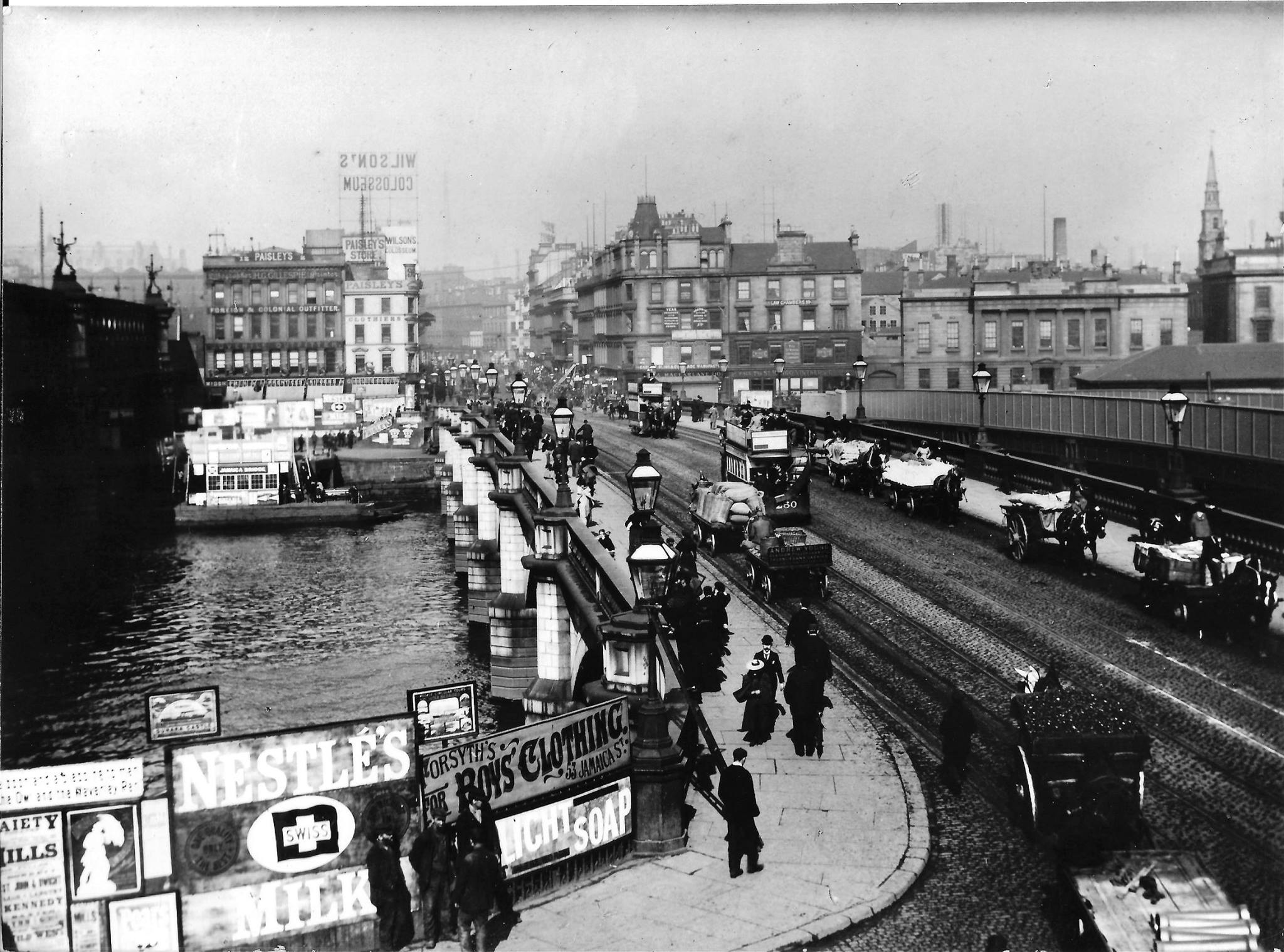
I think that, to contrast between Glasgow and Edinburgh, the difference, in terms of what Glasgow has lost, it’s more stark, there have been more dramatic changes.
Definitely. I mean, the period of late-60s and early 70s, when the motorway was blasted through the city and the Kingston Bridge and all the rest of it. I mean, that really did change the city forever. The M8 is, to use a sort of cliched phrase, it’s a scar that’ll never heal and it basically severed the city centre, the West End, severed a big bit of the southside from each other, severed big bits of the north side from each other. I mean, it wiped out huge bits of Townhead, huge bits of the southside, basically the whole of old Anderston, which, up until then, had been, yeah, living, thriving communities.
A lot of folk say Edinburgh hasn’t lost that much but Edinburgh’s actually always been as bad as Glasgow. Outwith the New Town and the Old Town, there’s stacks of good Edinburgh that’s gone. There’s still bits of it going.
So, in terms of the kinds of photographs that get the most reaction, does it tend to be kind of photographs of Glasgow characters or familiar streets that have changed a lot?
It’s a bit of both and it’s one of these strange things. You can almost never second-guess what the audience is gonna go for. You know, sometimes I can spend a couple of hours doing a lot of research of what I think’s a really good picture and you stick it up and you’ll get 500 likes and 30 comments and other times you can stick a picture up with not much thought, just a couple of lines of comment, and it’ll go absolutely mental ’cause folk see something and they recognise themselves in it if you know what I mean.
It’s that sort of strange thing in Glasgow. If you tap anyone on the shoulder, and say, “Are you interested in architecture and social history?” They’d shrug their shoulders and walk on. But, if you tap anybody on the shoulder in Glasgow and say “Do you want to hear a really good story?”, they’re, like, “Oh, yeah. I want to know. What’s the story?
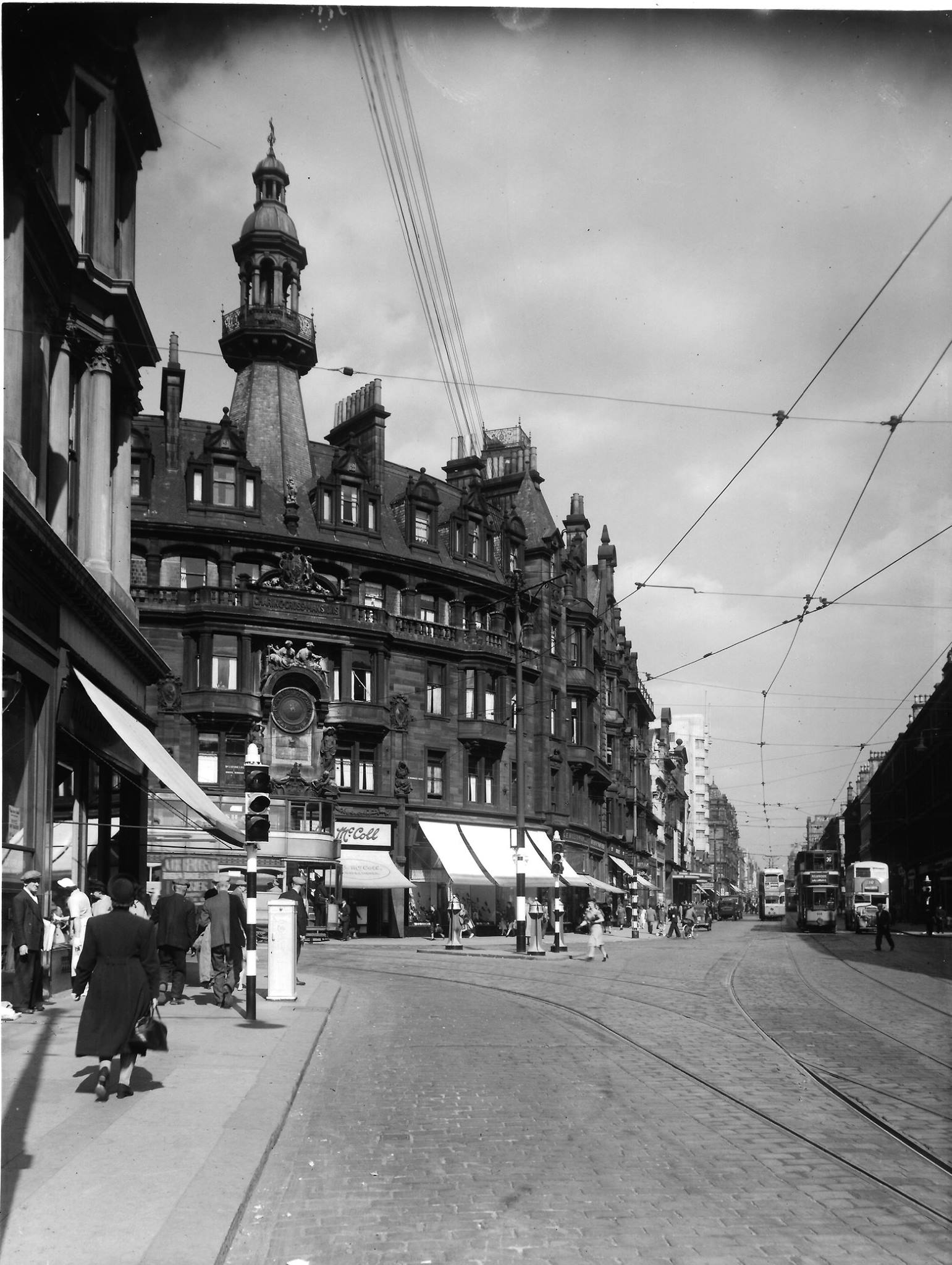
In terms of the reaction, is there mix between people responding with a positive wave of nostalgia and also maybe elements of readers who have a sense of regret, that in a sense they no longer recognise parts of the city?
It works at both ends of the age scale. The older fans on the site, obviously, react to things that they remember, which are no longer there and an awful lot of the younger folk react with complete shock and awe that these things were allowed to be demolished. They’d never known them. They never saw them and can’t believe that they existed in the first place. The at the older range of the age scale, you only have to mention some of the changes and you’ll get screams of angry folk going mad about what the M8 did to the city.
At the same time, you get loads of folk saying it’s brilliant because we no longer have to go through clogged up Glasgow and it’s a successful motorway but, again, you go back to the actual history books and when they built the M8, they lauded Glasgow as having the most advanced inner city motorway scheme in the whole of Europe and yet then, as now, Glasgow has the lowest per capita car ownership of any major city in Europe.
So they basically built a motorway through Glasgow for folk that werenae from Glasgow. Most Glasgow folk were getting the bus or the tram or whatever.
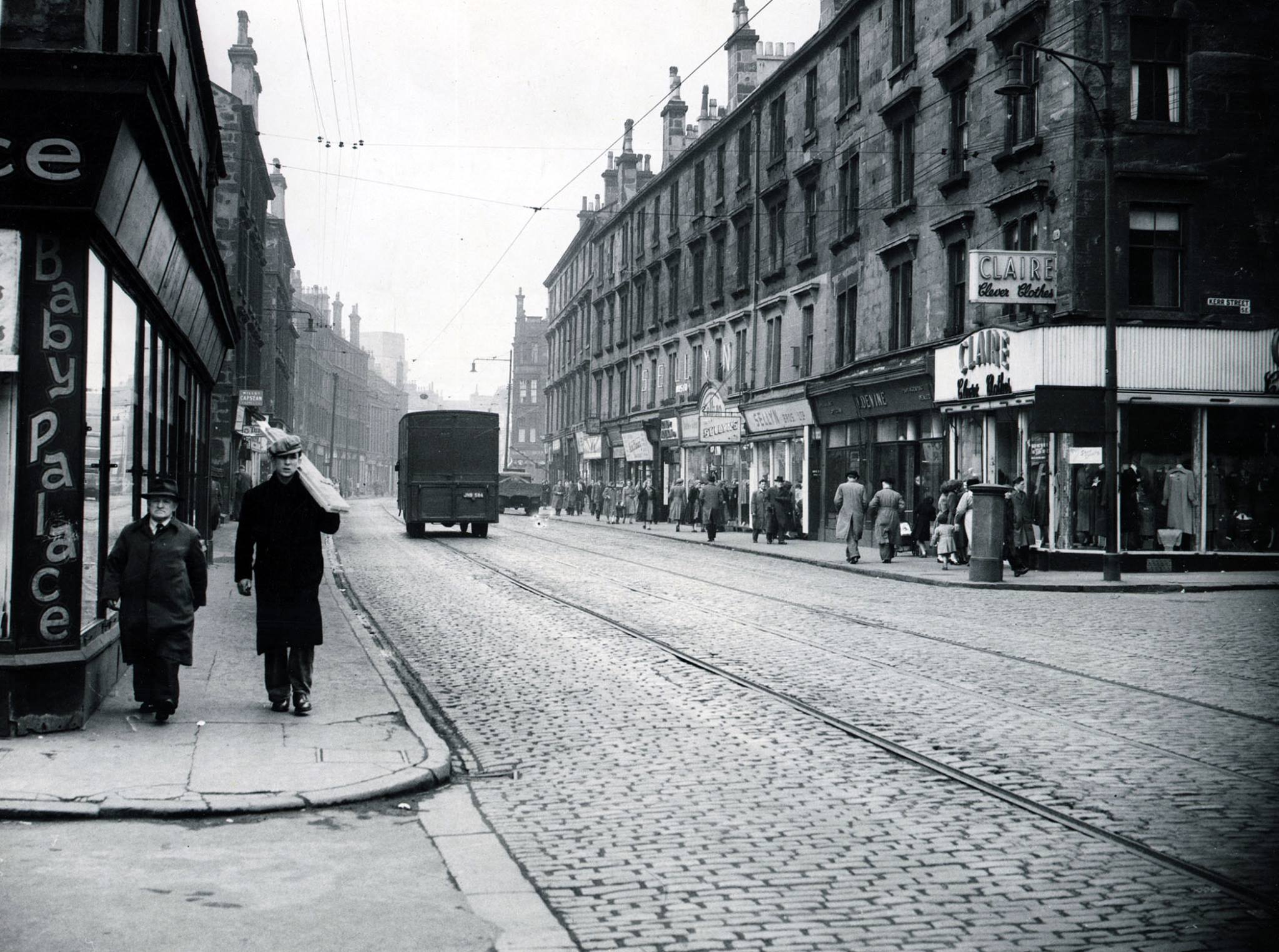
Some changes in Glasgow can be quite subtle, then others are more stark, but if you live here you always have a very particular idea of what the city is, what it looks like.
You know, the day that the city stops changing, the city’s dead. But most folks, myself included – you imagine that the Glasgow that you’re born into is the Glasgow that has always existed. And it’s not. Glasgow started up at the Cathedral and worked its way down to the river and then, slowly but surely, worked its way east and west absorbing other wee villages and all the rest of it to become Greater Glasgow.
I mean, years ago, Queen Street was the west end of Glasgow and then as the city developed a bit further, Buchanan Street became the west end of Glasgow.
Beyond that, there was green field ’til you got to Grahamston where Central Station was built. Beyond that, it was green fields until you got to Anderston. Beyond that, it was green fields until you got to Partick. They were all separate places with their own customs and their own ways of doing things and all the rest of it. Slow but surely, Glasgow swallowed them all.
That’s an interesting point, actually, because they’re still a semblance of a patchwork of villages within Glasgow and I hope that’s one thing that won’t change, that there’s these distinct identities.
If you bump into a fellow Glaswegian anywhere other than Glasgow you immediately know they’re from Glasgow because of their accent. The first question you ask them is “Where are you from in Glasgow?”
Everyone else just thinks, “Oh, they’re all from Glasgow” but, if you’re from Glasgow, you’ve got all these minor distinctions. Are you a westender? Are you a southsider? If you’re from the southside, “Oh where are you from on the southside? Are you a Govanite or do you stay in Shawlands?”
If you’re an outsider, there are almost all these invisible former boundaries, which most Glaswegians still have in their head.
Visit the exhibition:
29 June – 31 August 2017
Monday – Friday: 10-4pm
Saturdays: July 1st, 15th, 29th & Aug 12th 12-4pm
Free Admission
Glasgow City Heritage Trust
54 Bell Street
Glasgow
G1 1LQ