

The Sunday Herald is housed in a deliberately impressive glass building, hidden in plain sight at the top of Renfield Street. The media headquarters is a product of the chest-puffed-out confidence of the Scottish media that coincided with a new millennium. It was built at the dawn of the information age. Newspapers and television stations were preparing for a land of plenty.
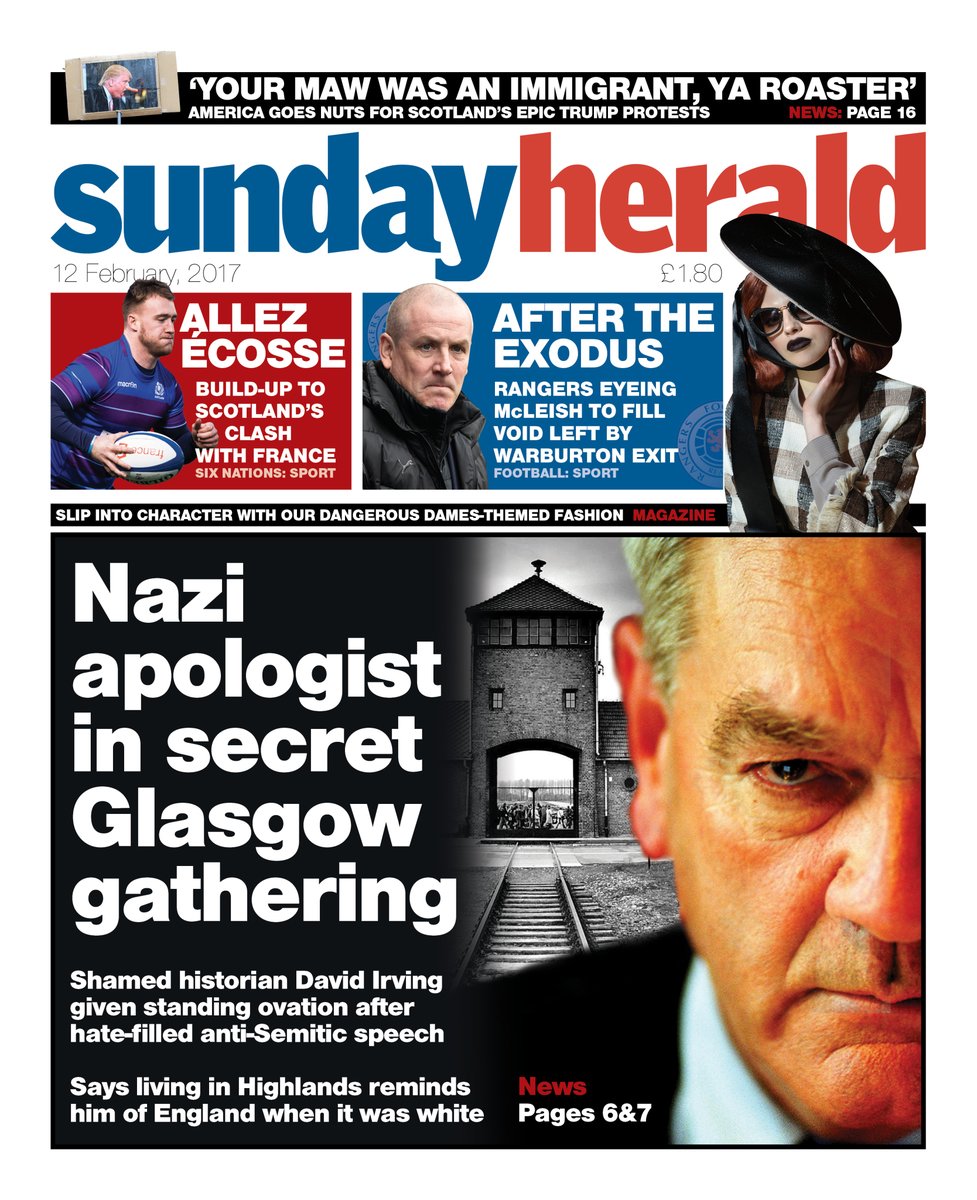
In the midst of manoeuvring between the main players in the crowded Scottish publishing market, a decision was made in the old Herald Building on Albion Street to launch a Scottish broadsheet title. The Sunday Herald arrived on 7th February 1999. Today that newspaper published an edition that marked its 18th year in print. It did so with a front page story that gives a reminder of it’s commitment to investigative reporting.
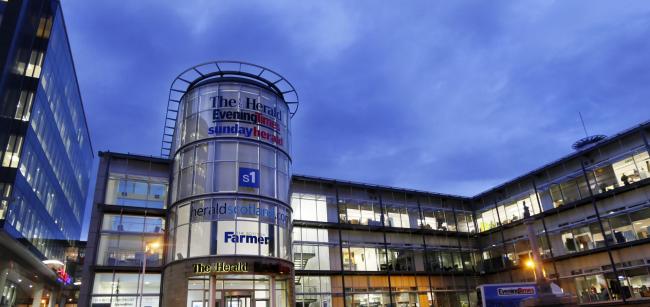
On a Wednesday evening, I’m sitting in the office of Sunday Herald editor Neil Mackay. The glass room looks out onto a floor of journalists and production staff. Deadline is approaching but there’s an industrious calm that could only be disrupted by breaking news stripes on television sets, or maybe a tweet from the American president.
On one wall of the cube, away from the orderly clattering of keyboards, there’s a selection of old newspaper prints on the wall, mostly historical – the largest is an image of Gene Kelly striding out in front of Central Station.
I spent some time in the original Sunday Herald office when I was a student. I remember it as a place where folk wanted to do things differently. It was the first newspaper office I had seen that was kitted out with a suite of iMacs and they led the way in publishing an internet edition.
When we meet, Neil Mackay is friendly, open and direct. He wants to know how long our chat will be (I say 15 minutes, it ends up being 50), more, it seems, because he’s the type who lives his working day in regimented segments, rather than any desire to limit the conversation.
He is originally from Antrim and was working in Belfast before he moved here in 1996. He had covered the crime and terrorism beat in Northern Ireland and was looking for a fresh challenge. “The peace process was underway and I thought maybe the news environment was going to be a bit less exciting, it might become more constitutional, more political rather than the stuff I was doing which was shootings and bombings” he says. His next destination would either be London or Glasgow.
A job came up in Glasgow at the Big Issue so he shipped over with his girlfriend, now his wife. They didn’t know much about Glasgow but figured it was similar to Belfast in terms of the people and the architecture – “working class, red brick, building ships, like a drink, like a fight, like a bit of crime”.
He was working with the Scotland on Sunday when he was approached by Andrew Jaspan to be one of the team of launch editors for the Sunday Herald. He started writing on a new crime beat. “It’s fairly easy to switch from covering terrorism to covering organised crimes. Same thing. Same sort of approach to news. That was pretty easy” he says.
I’m curious about his own thoughts at the start of the paper’s existence. “It was quite a daring venture, I think, because we have one of the most crowded newspaper markets still. It was a daring venture, but I think it was right.”
“There was no strong liberal voice in a left-ish country. Scotland on Sunday, which I had worked for, I was not happy there because it had a right-wing agenda. I found it very difficult to cover the stories I wanted to cover there because of certain figures who were, well, I felt not representing the kind of journalistic voice that the country needed, which was challenging the right-wing consensus at the time and reflecting the left-ish sensibilities of the Scottish people. I think that’s where the wisdom lay in starting the Sunday Herald, that there was a market for a quality liberal newspaper.”
I remember that in the early years of the paper, writers were given a platform to probe issues to a level of depth that goes beyond the normal news cycle.
Neil was close to that side of things. As the investigation editor he spent years continuing his work on Northern Ireland. The result was the dramatic naming of the man identified as the British Army’s top agent inside the IRA. “Investigations is in my blood. It’s what I do. A lot of the stuff that I took over here was work that I’d been doing about the dirty war and collusion in particular. It’s much less risky over here than it was over there to report on these issues.”
“We did the definitive work on the dirty war from Glasgow because I was given the liberty to really spend years. I took years until I named Stakeknife. That really is the summation of an investigation, because that was it. We proved, not only did the British intelligence services totally own the UVF and the loyalist paramilitaries lock, stock, and barrel, but now we proved that they owned the IRA lock, stock, and barrel.”
“Really to me that’s the nub of the dirty war that the British were up their arms in blood on all sides” he says.
Neil talks in a rapid succession of linked points. Our conversation strays back to the Sunday Herald’s place in the Scottish media spectrum. Neil warms to the subject, saying “for years we’ve been going on about trans rights. What other newspaper’s given a damn about the rights of the LGBT community? We were the only paper to say scrap Section 28. Get this awful thing off the statute books. We’re still fighting for minorities. Not many papers are doing that. Not many papers are liberal anymore.”
In interviews with the people featured on this website, an idea that could be described as Glasgow values is often mentioned in some shape or form.
Walk into any pub in the city to try and find a consensus on the issues of the day and you’ll encounter a myriad of views. Actually, we might try that some time. However, for all our alternative outlooks and traditions, there’s a presumption that the people of our city, collectively, have an inherent interest in social justice. This puts Glasgow out of step with other areas of the UK right now.
I propose that being based in Glasgow may have had an affect on the outlook of the Sunday Herald. “I think the air that you breathe and the environment in which you live does affect you. We were a liberal paper anyway. We were a paper that cares about social justice that wanted to campaign on all those issues that would probably tick the box of most people who would see themselves that way inclined” Neil says.
“Things emanate from where you are from. The culture of Glasgow, whether it’s the campaigning women of the rent strikes which maybe informs our view of celebrating strong women and wanting to give women a strong voice. Maybe it’s Red Clydeside on the modern side of that, which is saying food banks are a disgusting thing, austerity is a disgusting thing, imperial western adventures are not what we’re about.”
“I think it would be hard to live in a city like Glasgow to reject what it is about, because it’s a great, vibrant, wonderful city. I hope we do celebrate so-called Glasgow values, but I think we represent Scottish values as well – fairness, scrutiny, celebrating intelligence and thoughtfulness, communitarian values which are maybe rooted in a deeper part of the Scottish past.”
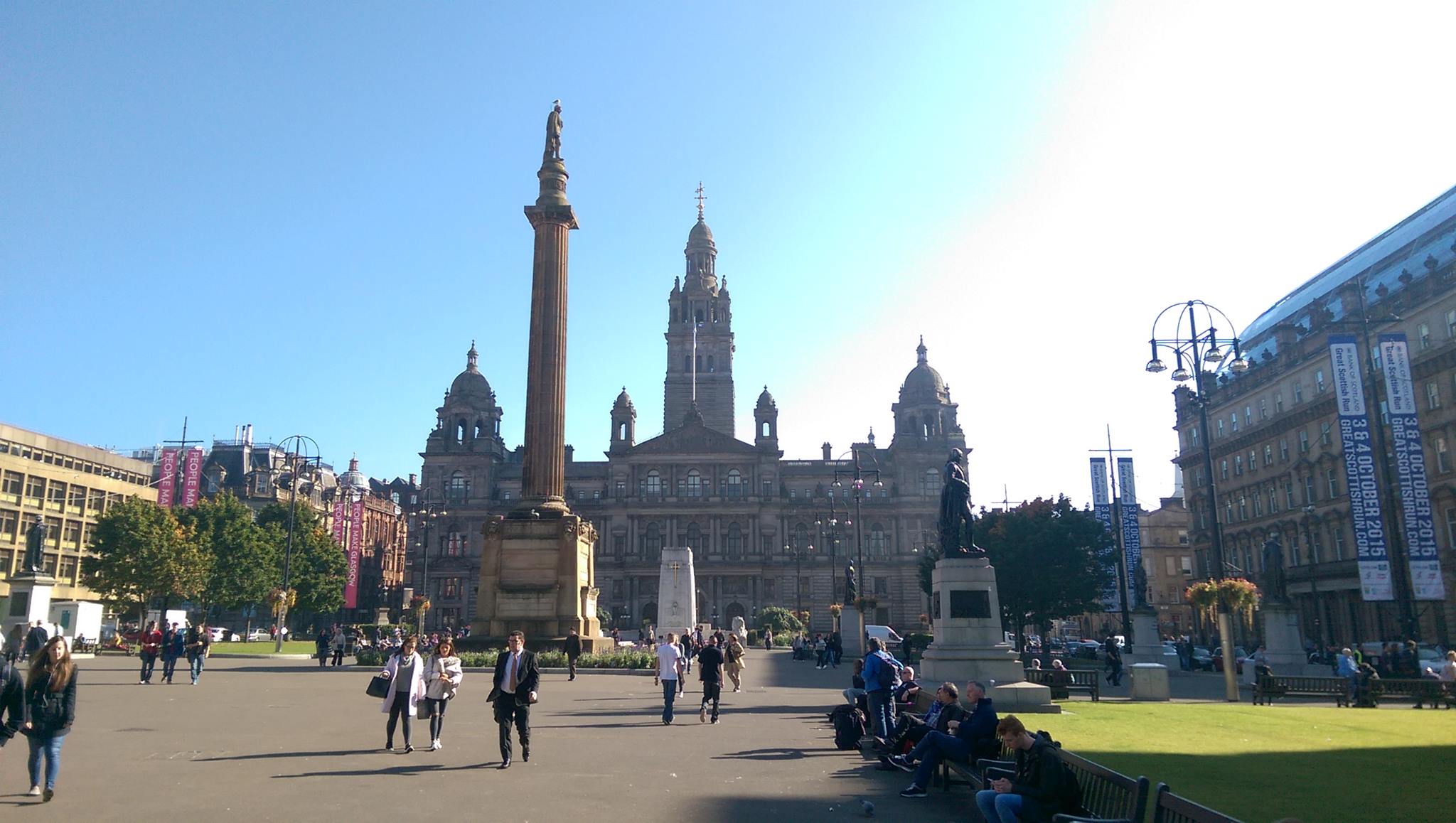
When I start talking about Glasgow news and its place within the pages of the Sunday Herald, Neil emphasises that he edits a national title, with an international outlook, but local news has a place. “We’re not the paper of record” he says, so it’s for The Herald and Evening Times to provide a digest of events. Sunday papers offer a different analysis.
That’s fair enough but there are parts of the city that could do with some more attention. Places that has not been swept along by the tide of confidence and regeneration in the last two decades. While some areas prosper, others remain unchanged and mired in problems.
“I’m still astonished at the levels of poverty” Neil says. “I was deputy editor at the The Big Issue [in the late 1990s]. It really hasn’t changed very much. I walk down from the office here and there’s a homeless guy or girl freezing on every street corner. The mismanagement of the city still hasn’t changed.”
“Look at Tradeston. What a horror show. You get to the south bank of the city and it just stops. What city with a south bank doesn’t use it for recreation, boat trips, bars, art galleries?”
“My two daughters are 19 and 20. They’re both lucky because they’re at good universities. Some of their mates who didn’t go into university, though – they weren’t maybe quite as academic – that’s a generation of wee entrepreneurial grafters because they’re starting up nail bars, and dog walking, and coffee shops, and pretzel bars. They’re entrepreneurs. That’s to be celebrated. We’ve got to look to cities like Utrecht who fill up their lanes with small businesses and remove barriers. Our young entrepreneurs could, when you give them absolutely bargain basement rents, start filling our lanes up.”
“That’s why that Labour administration needs to just get out of here. We need a new administration that’ll really turn Glasgow into the city it can be.”
Moving on to the current reality, journalism is under pressure around the world, not just in this city. Less people will pay for news. Alternative facts is a thing. Every person with a keyboard wants to share. Every brand is a publisher.
There’s a monumental shift in the media industry taking place, a quantum leap forward, but it is putting a huge amount of stress on the traditional newspaper model.
Social media has jutted into the equation and Twitter is where the traditional media and the public collide. Does Neil find social media a useful way to communicate with readers?
“No. I find social media detestable. Of course I use it because I have to use it, not just for this job, but I write books and I make films and I do radio. I’ve got an intellectual product to sell. I don’t like that word product, but it is. It’s something I’ve created. I’ve made it. I want people to read it and enjoy it” he says in a deliberate fashion.
“Social media is everything that is wrong with the world, and I wish we could turn it off. I think it is de-intellectualised us. I think it has robbed us of introspection, which is the most important thing a human being can have. The best ideas I get are when I’m staring out a train window. Who stares out train windows anymore? They’re just swiping and swiping.”
“It’s created echo chamber thinking where some people have completely lost the ability to not just accept ideas outside their own bubble but they’ve lost the ability to navigate how language is used.”
Neil cites the example of a Sunday Herald front page after the Paris attacks with a “France at War” headline. It was a Francois Hollande quote but there was a wave of messages on Twitter claiming that the Sunday Herald was advocating war. “They didn’t understand it. They confused reporting with commentary” he says.
At the moment, there are a lot of very important conversations on a variety of online platforms around political issues that are crucial for Scotland. I personally think that social media is important for exchanging ideas about what kind of a country we want to live in, but then I’m not one of the editors that wake up to a flood of abusive messages in my Twitter feed every morning. Not yet anyway.
Granted, a lot of these conversations aren’t going anywhere. We should be better at this. Surely it’s the most Glasgow thing in the world to have a proper chat and win an argument? Maybe a blether over a pint is more effective than projecting views in 140 characters or less.
“That’s what we should be doing. You’ll change more people’s minds with old-fashioned social media. The voice and the face will change more people’s minds. I don’t think I’ve changed one person’s mind ever on social media. I know my book on Iraq changed a lot of people’s minds. I know that when I sit down and I have conversations with friends they might not agree with me but we’ll probably shift each other a bit” Neil says.
Incoming messages to staff here are often provoked by the Sunday Herald’s support for Scottish independence. The decision to support a yes vote in the 2014 referendumset the paper apart from every other national newspaper.
It seems this puts the Sunday Herald in the crosshairs of those who support independence as much as it did those who voted to remain part of the UK. “We’re not independence at all costs. To achieve independence at the moment, the SNP look like the way forward. That doesn’t mean everything they do is right. Far from it. They haven’t necessarily been the great government we wanted them to be. They’ve been very status quo. Look at taxation. Haven’t really pushed that progressive agenda the way we want, attainment gap. A lot of image, baby boxes, not a lot of action” Neil explains.
So the Sunday Herald is pilloried by some animated online SNP supporters for being traitors to the party while being painted as nationalist stooges by unionists, often over the same article. That’s modern publishing though and for all Neil’s very measured bluster about social media, it doesn’t stop him celebrating when a Sunday Herald story goes viral or flagging a story on the front page that’s been generated through curating Twitter reactions.
I want to discuss the decision to decide to support independence. It was a risk. It could have had a negative affect on the paper in a precarious market.
Neil thought of it as a natural progression. “Don’t forget. We really made our name with our opposition to the Iraq war. We were getting a million readers in America on our website. The love affair with Blair ended, our love affair with Labour, so where was a naturally left-wing paper to go?”
“The SNP were emerging as a progressive voice. It was a natural step-by-step-by-step, the way many voters did. When I came over here I was a Labour voter. I’d sooner cut my mitts off than vote Labour now.”
“At the moment I find myself, as one citizen, happy to cast a vote for the SNP because they seem to be the best place for a progressive voter to put their X. Maybe 15 years from now it might be the Greens that I see as progressive.”
“I think I’ll never be able to leave my desire to see an independent Scotland because I do believe that’s the only way that progressives can ever achieve what they want to achieve in the world because Westminster is the antithesis of progressive values.”
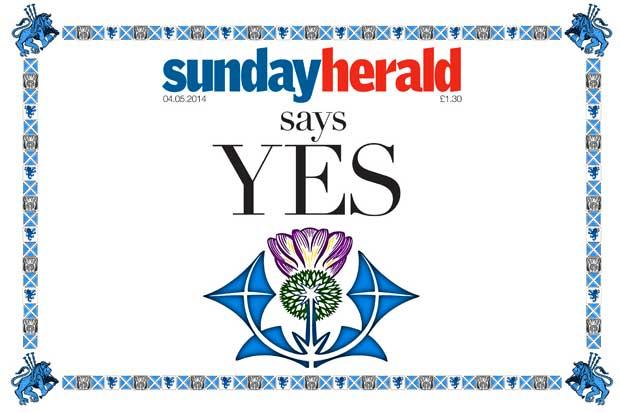
I wonder if it felt like an intimidating decision to make as an editor?
“I didn’t find it scary. I thought it was something to celebrate. I’m delighted we did it. It was also the right thing to do in terms of if you believe in the plurality of the press how could you have 100% of the press only represented, what, 55% of the population? Where was the other 45% going to have any representation?”
“That wasn’t made out of thinking “let’s go for the indy dollar”. That was actually more, “People need a voice here”. We as a group we’re all naturally… I mean there’s one or two members of staff that are ambivalent about independence. This is not a dictatorship. You don’t have to vote indy to write for the Sunday Herald, we’re not some sort of weird intellectual closed shop. All voices welcome.”
It’s inevitable that we talk about President Trump. He is an inescapable presence across all media. An orange-faced, grimacing, junk content factory. He chips away at the trust in the mainstream media as a matter of policy.
“The cherishing of fact has been belittled. Trump and Brexit. It’s our job at times to say pause, guys. This is really important. You need to know what has happened.”
“The distrust, the media’s brought a lot of this on itself. I don’t think things like idiot tabloid dirtbags hacking dead kids’ phones have helped. Send them to jail, lock them up. They’re a disgrace to the profession as well as a disgrace to humanity. Then the Iraq war. All those papers jumping on those lies about WMDs. That’s corrosive. The lies that were allowed to fester over the referendum, that’s corrosive.”
“No one has ever hacked a phone here. We’ve only ever brought down bad guys by legit methods. We were on the side of the angels when it came to the Iraq war. We were daring enough to give other people a voice over independence, championed devolution. We have mostly been on the side of the angels, this paper. I feel that sometimes I get pissed off. I feel we’re getting hit for all the shit that the rest of the industry’s done.”
Someone comes in to collect a pile of story print-outs. There is work to be done so I finish up by asking about the mix of stories Neil is looking for each week. In the years ahead, that’s what the Sunday Herald will depend on to sustain itself.
“Our attitude makes us distinctive. You are going to get different voices and difficult questions in our newspaper. We’re progressive in a field of reactionaries, in a field of right-wing old codgers with cobwebs hanging off them. We have a young vibrant attitude to the world and to politics and to culture.”
“We celebrate this country because it’s a great country. This country has been great to me. It has raised my two children who now say they’re Scottish. It has been great to my wife. She’s Irish, too.”
“Absolutely I want to hold the government up to scrutiny as a watchdog, but there’s more to being a journalist than being a watchdog. In terms of our cultural pages and our view of the society in which we live, it should be celebrated.”
“This country, in the 20-odd years since I’ve been here, it has come on leaps and bounds. It has changed enormously. It is one of the most vibrant and friendly societies in Europe.”
“Look at our position we took on refugees. I mean, dear God, just go south of the border and it’s a different world.”
“You need a light touch to balance the dark because obviously there’s a lot of a dark in the world and heavy politics at home, grimness overseas. You want that kind of a deftness of touch when it comes to the mix of the paper so there’s light and shade and some humour amongst all the grisliness.”

[…] pictured left, made the comments in a piece for hyperlocal website […]